Artist Residency: Exploring the HLA Archive

Artist Residency: Exploring the HLA Archive
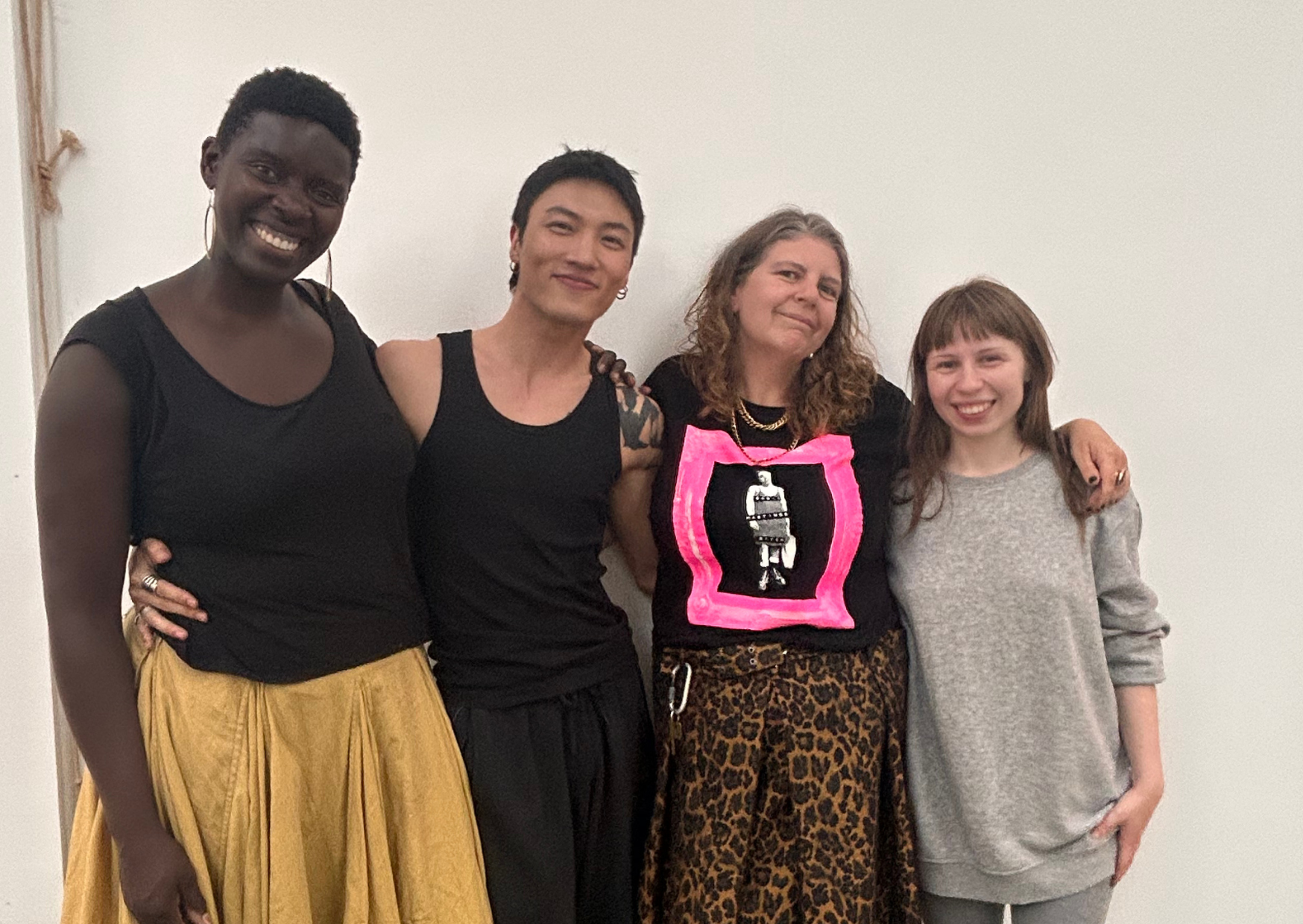
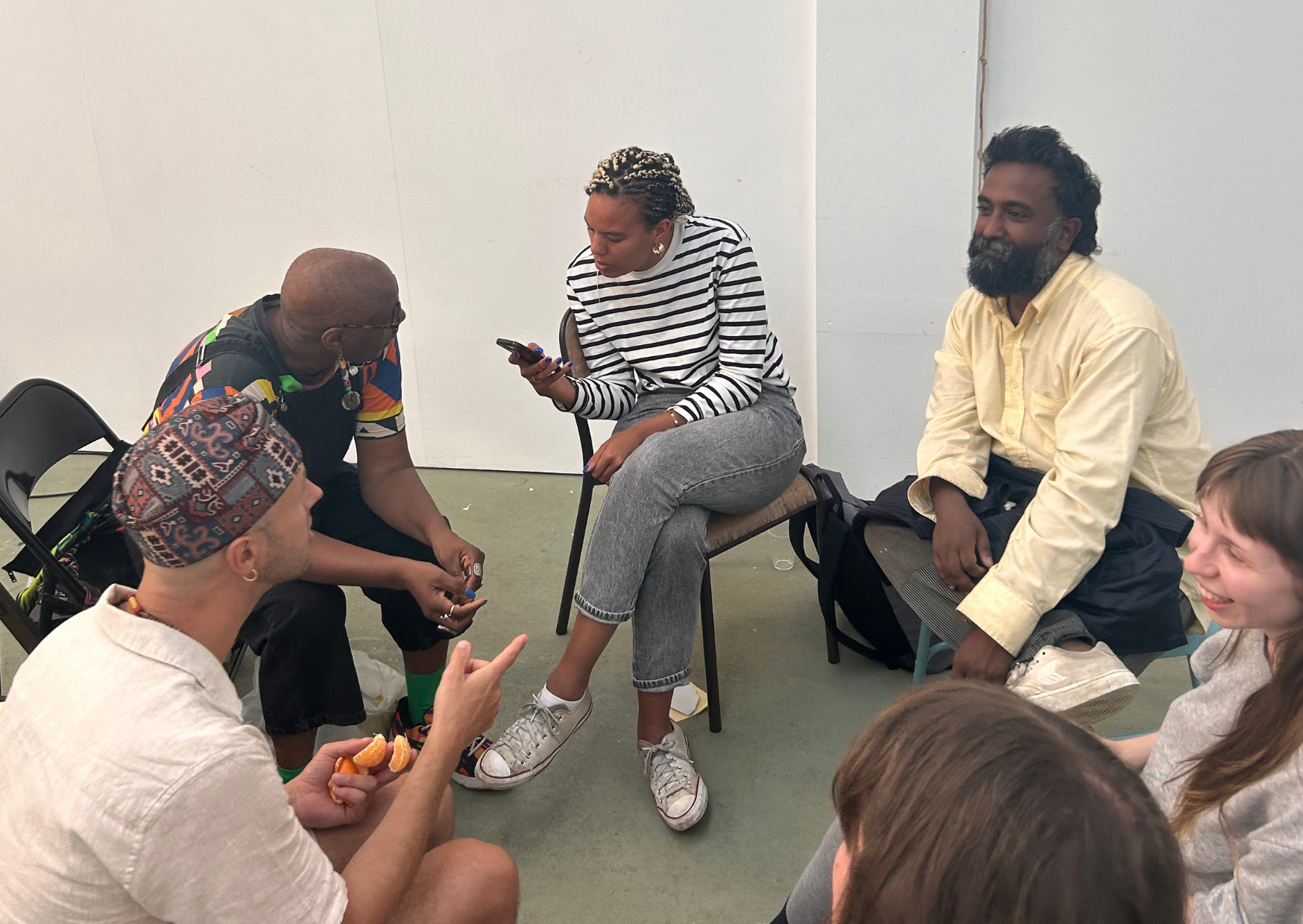
In July 2025, Home Live Art partnered with Central Saint Martins art college to host a week-long residency in our St Leonards studio for two artists studying on the MA Fine Art and MA Performance courses: Jacob Zang and Juliet Cook.
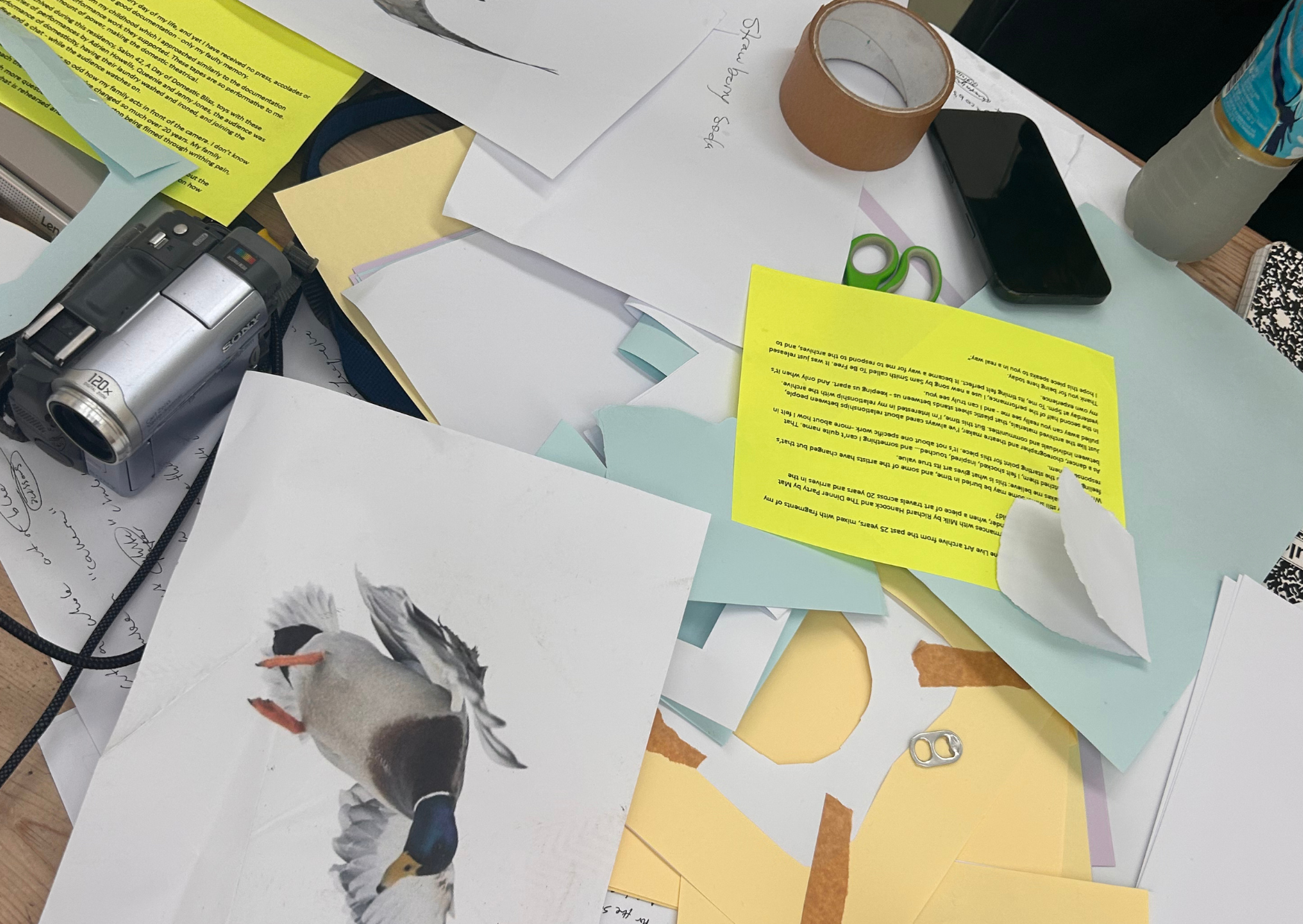
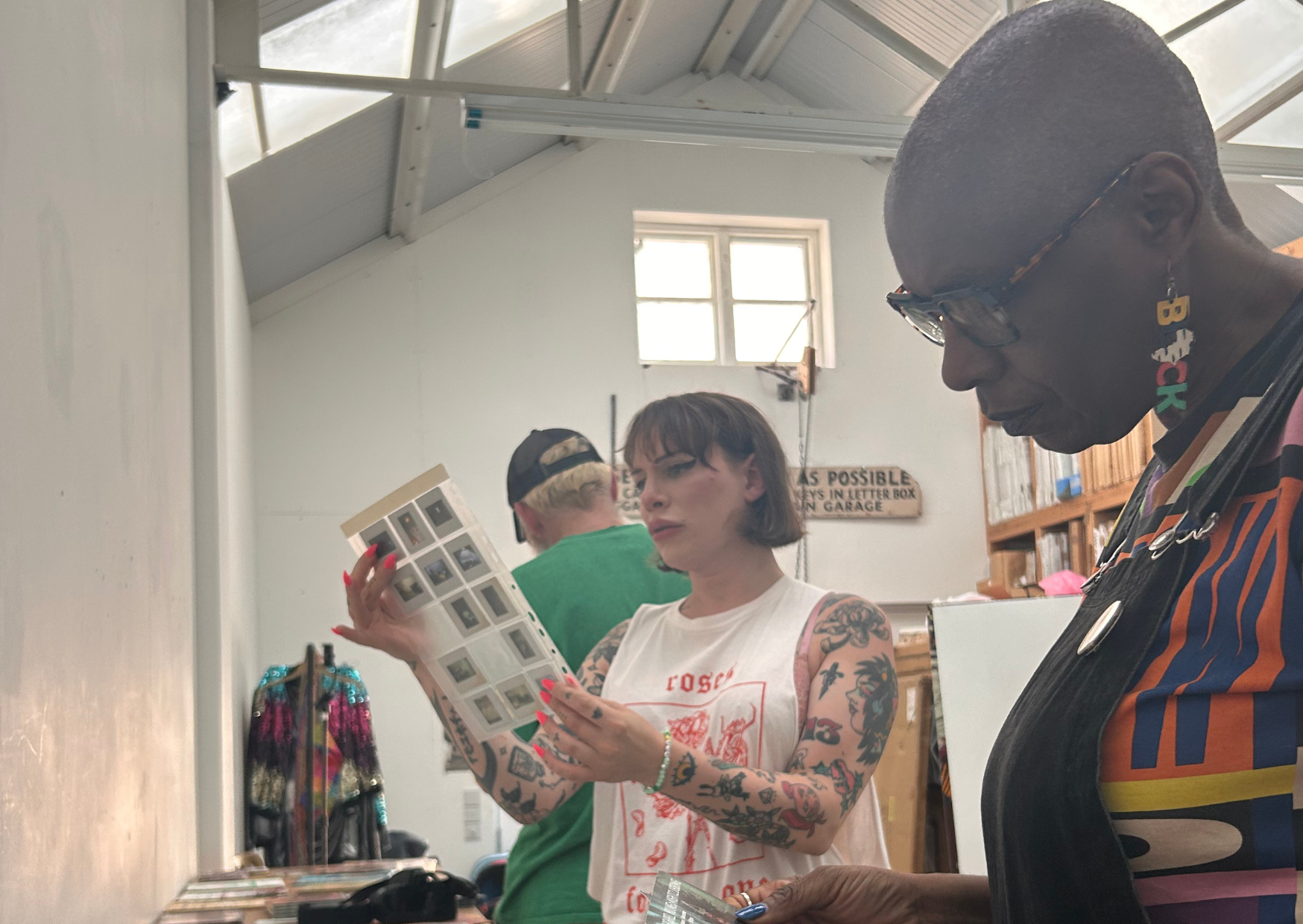
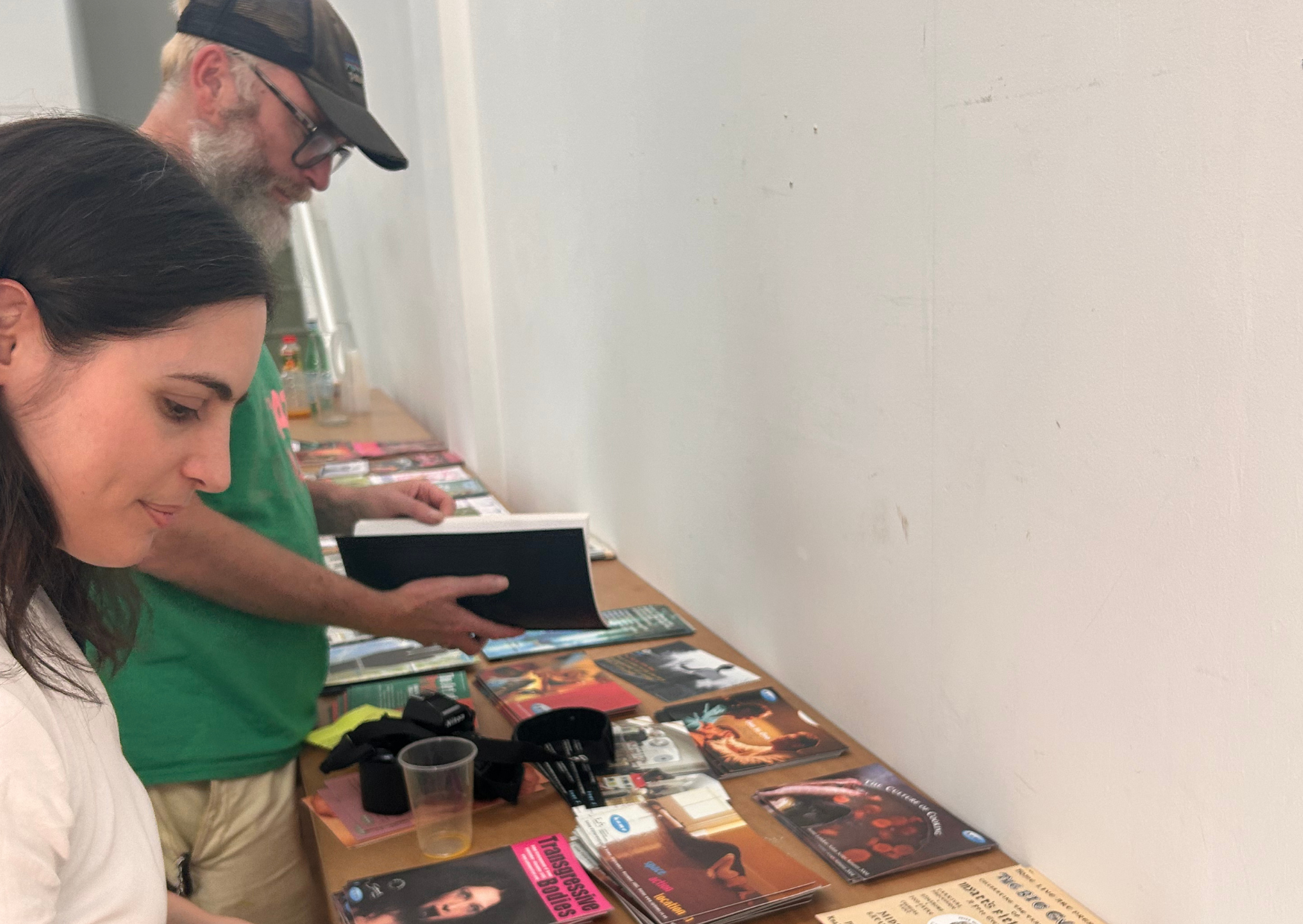
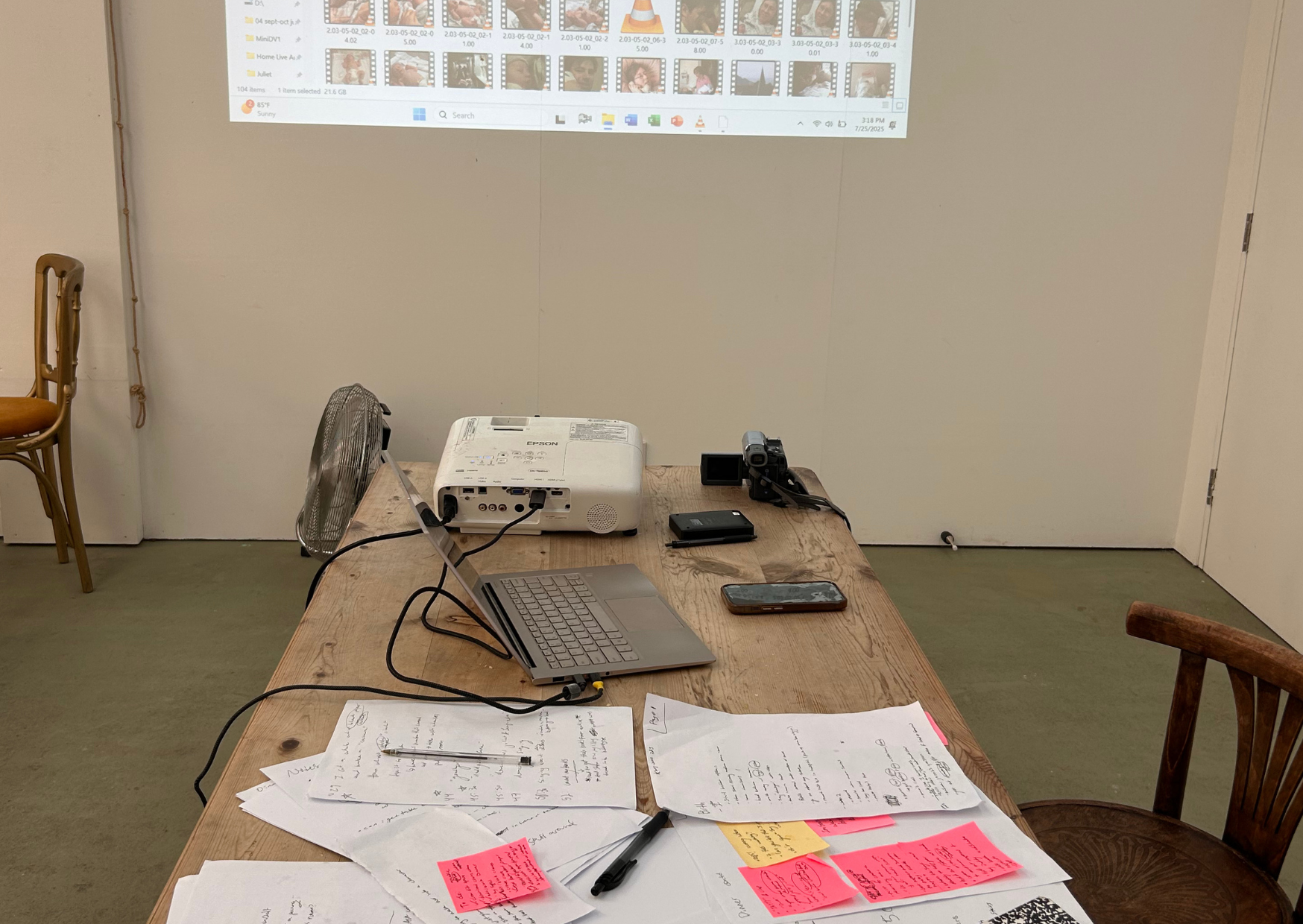
Over the course of the residency, Jacob and Juliet delved into 26 years of Home Live Art’s archive – a messy, rich collection of experimental performance and community-led work. From old flyers to dusty CDs, they explored how live art has been documented, remembered and sometimes forgotten.
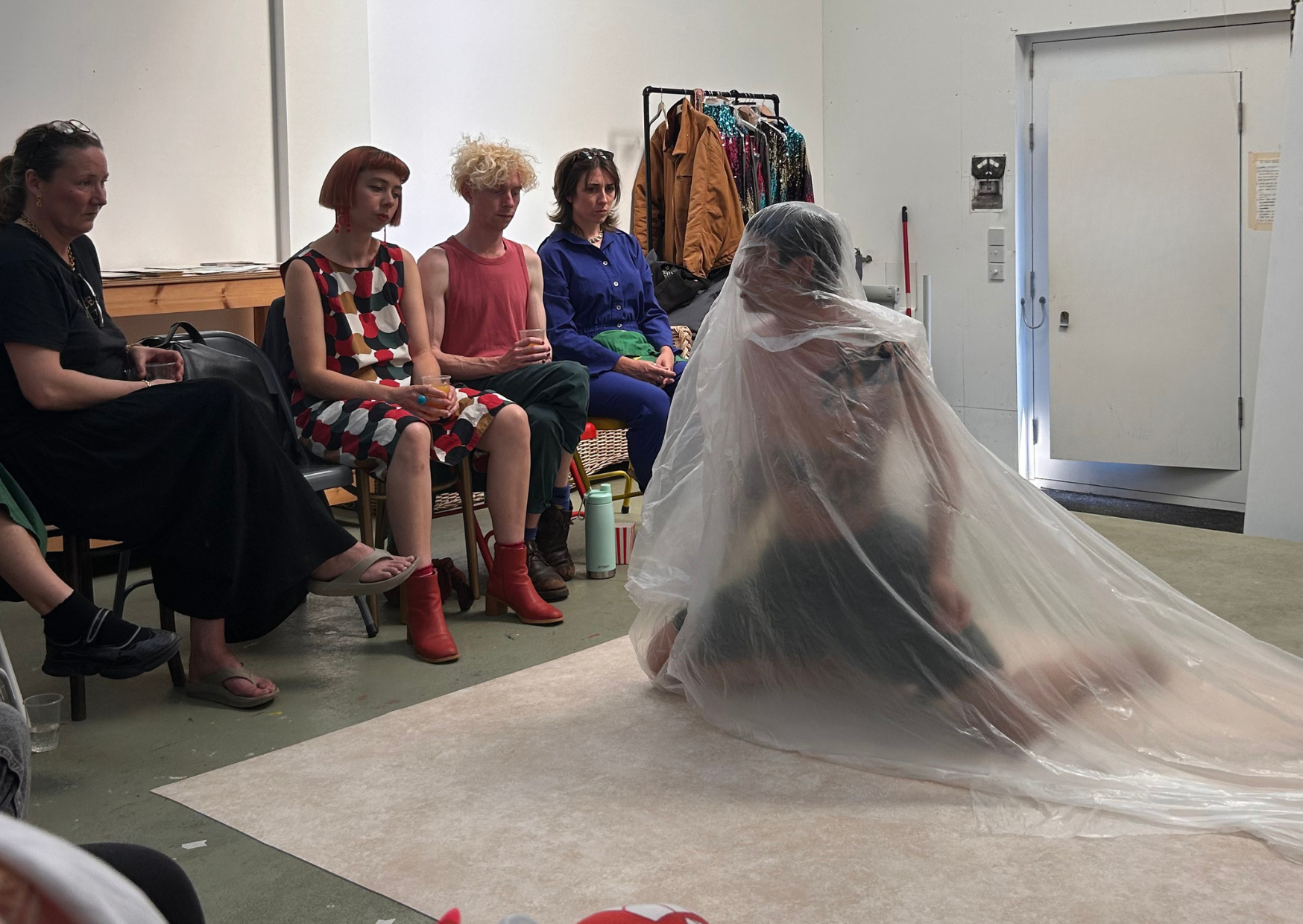
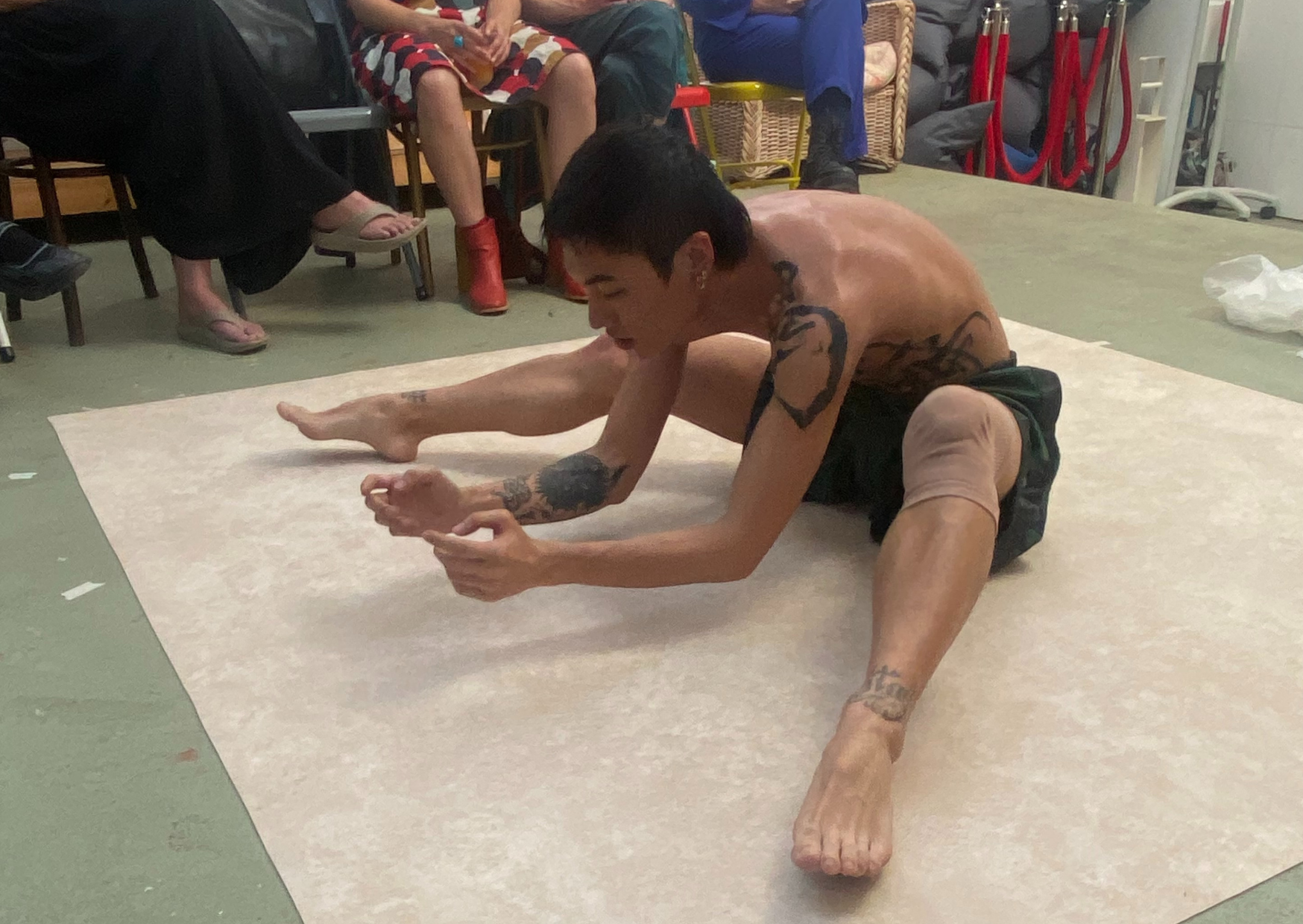
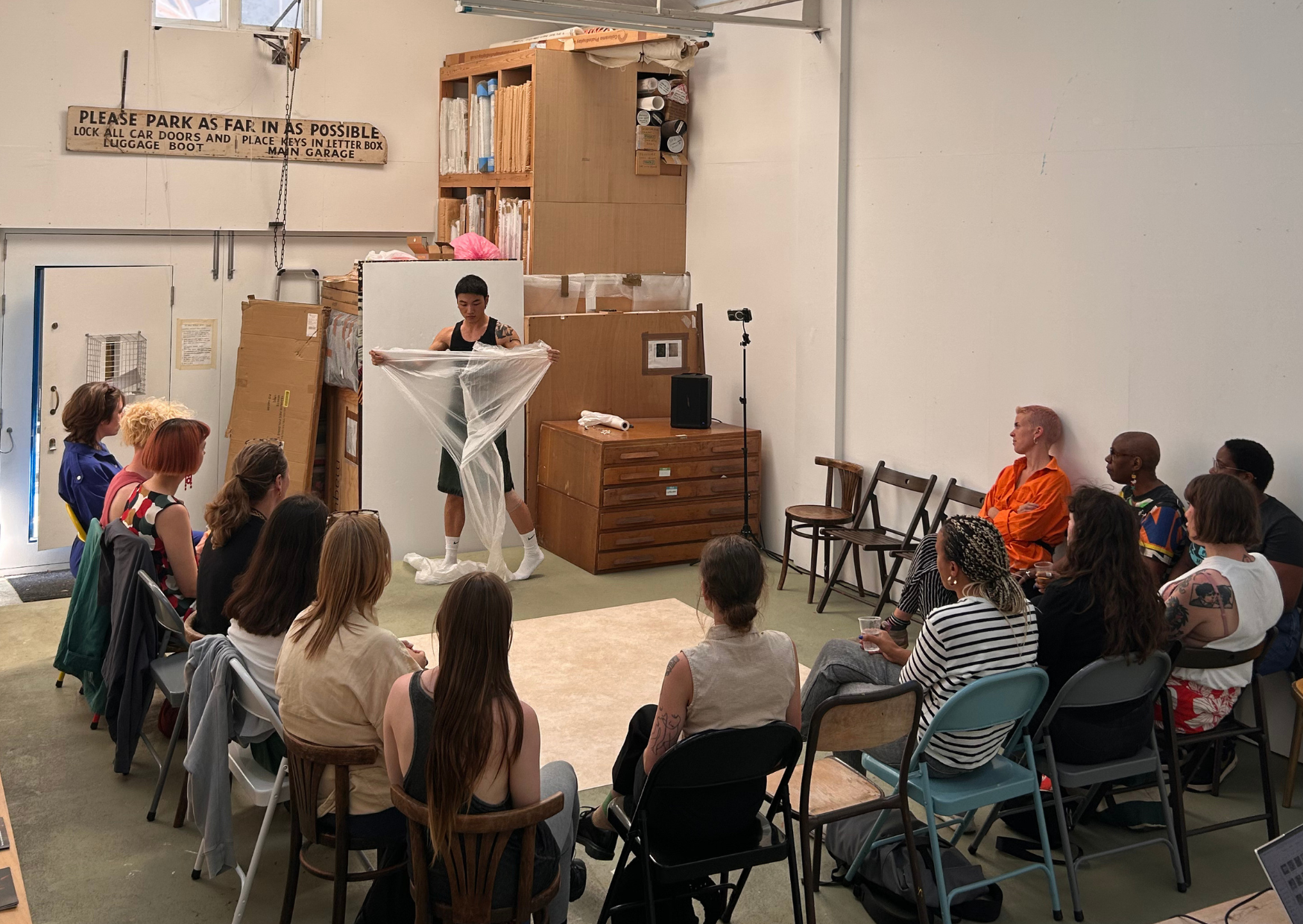
The week culminated in two live performances from each artist, responding to the archive and its relationship to their own practices. An invited audience of local artists and programmers came to experience the work and take part in the conversation.
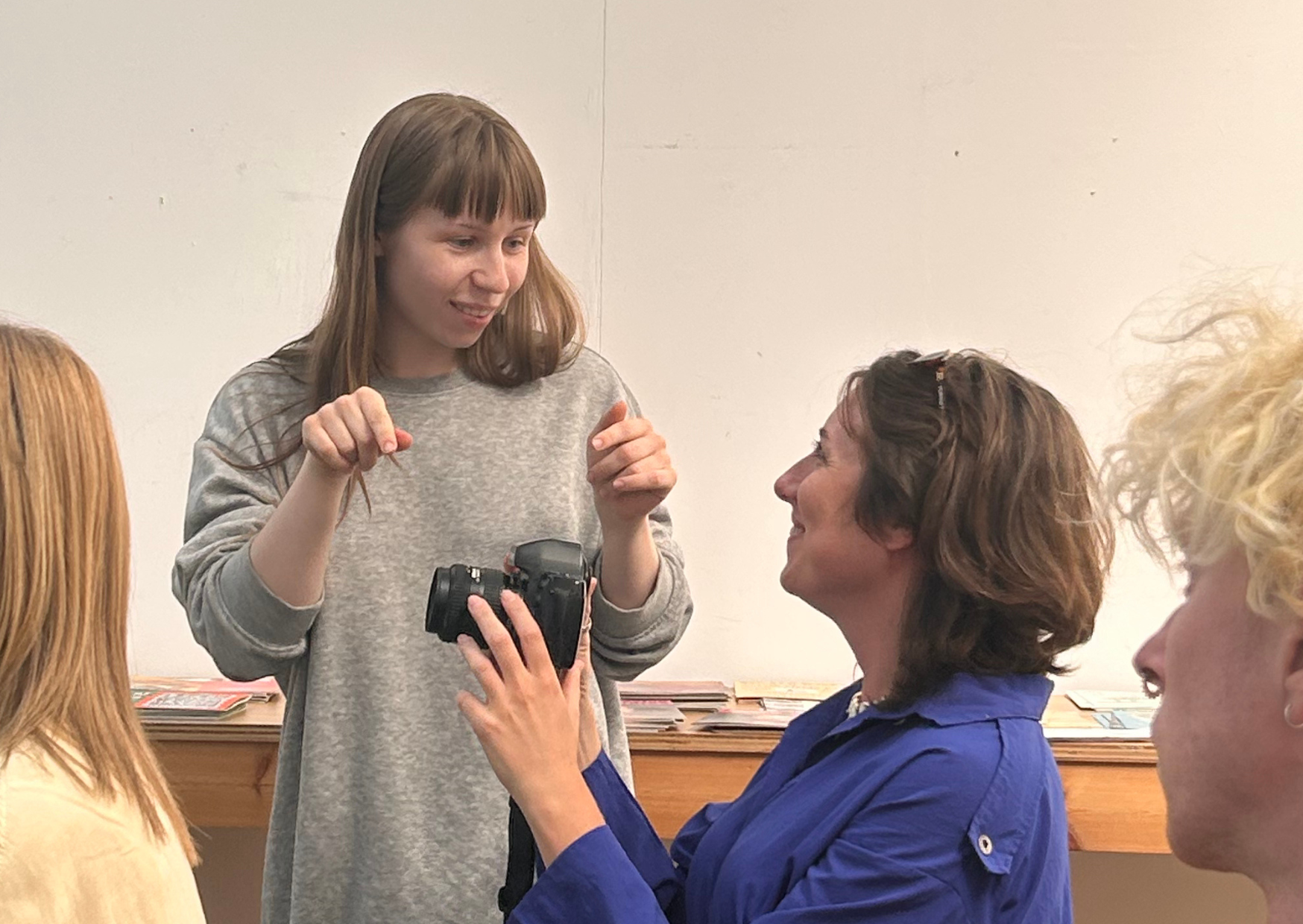
During their time with Home Live Art, Jacob and Juliet worked with local artist Anna Maria Nabirye and Central Saint Martins tutor and artist Owen Parry on the development of their performances and to reflect on what it means to create a live response to an archive.
About the Artists
Juliet Cook works across performance, sculpture and photography, exploring self-objectification as a form of embodiment and challenging how we read the contemporary art object.
Jacob Zang is a choreographer and theatre maker working across dance theatre and physical performance. His work is intimate and experimental, using rich metaphor and multilayered sensory experiences to invite audiences into spaces of reflection and imagination.
Artist Reflections
After the performance, both artists shared written reflections with the audience. Shared below.
Jacob Zang
“This piece is a response to the Home Live Art archive from the past 25 years, mixed with fragments of my own life.
I was deeply moved by Nine Performances with Milk by Richard Hancock and the images of the work of Mat Fraser.
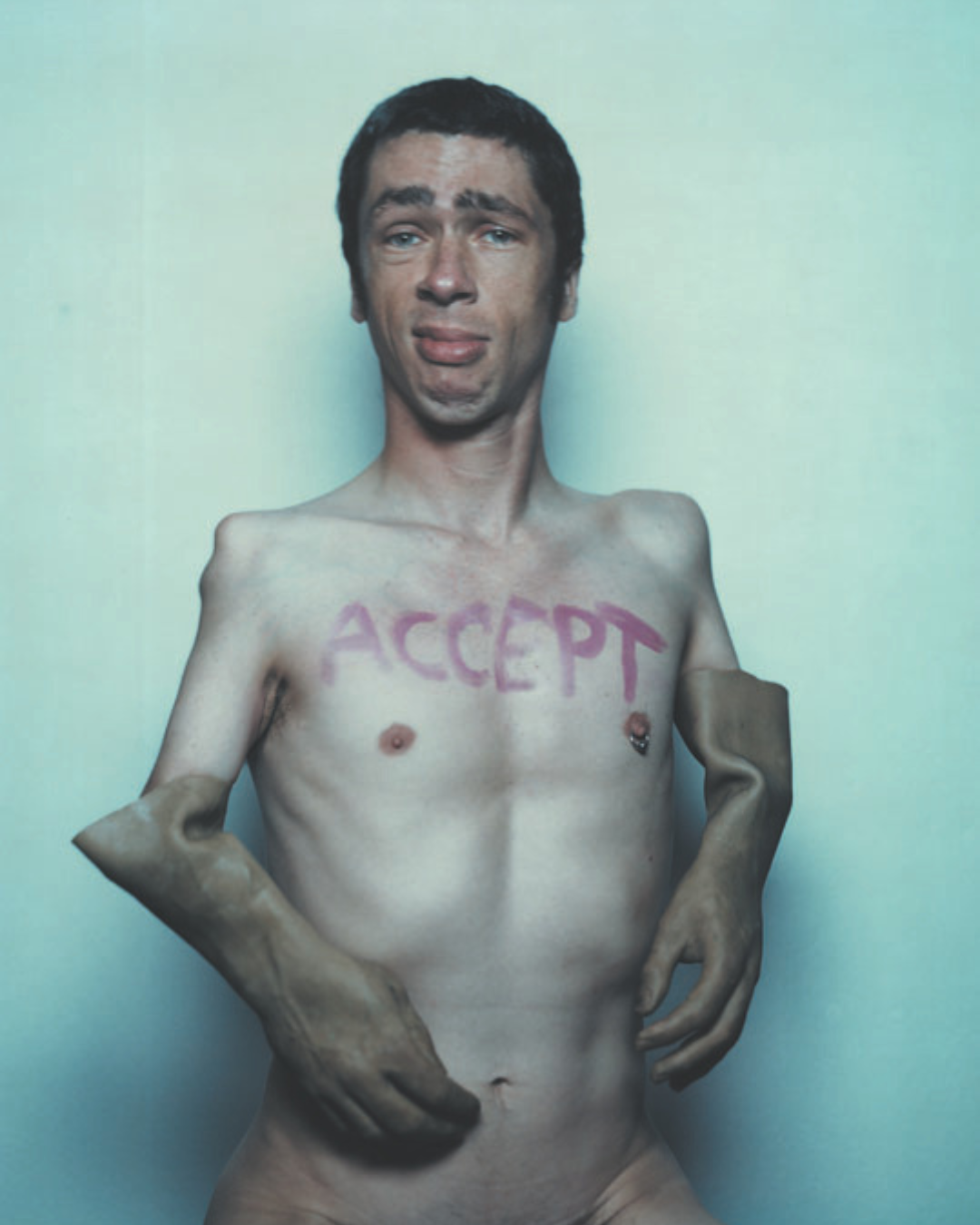
Mat Fraser
These works made me wonder: when a piece of art travels across 20 years and arrives in the present, does its meaning still hold?
I think the answer is yes.
Even now, they still shine. Some may be buried in time, and some of the artists have changed, but that’s exactly what gives art its true value.
When I first watched them, I felt shocked, inspired, touched and something I can’t quite name.
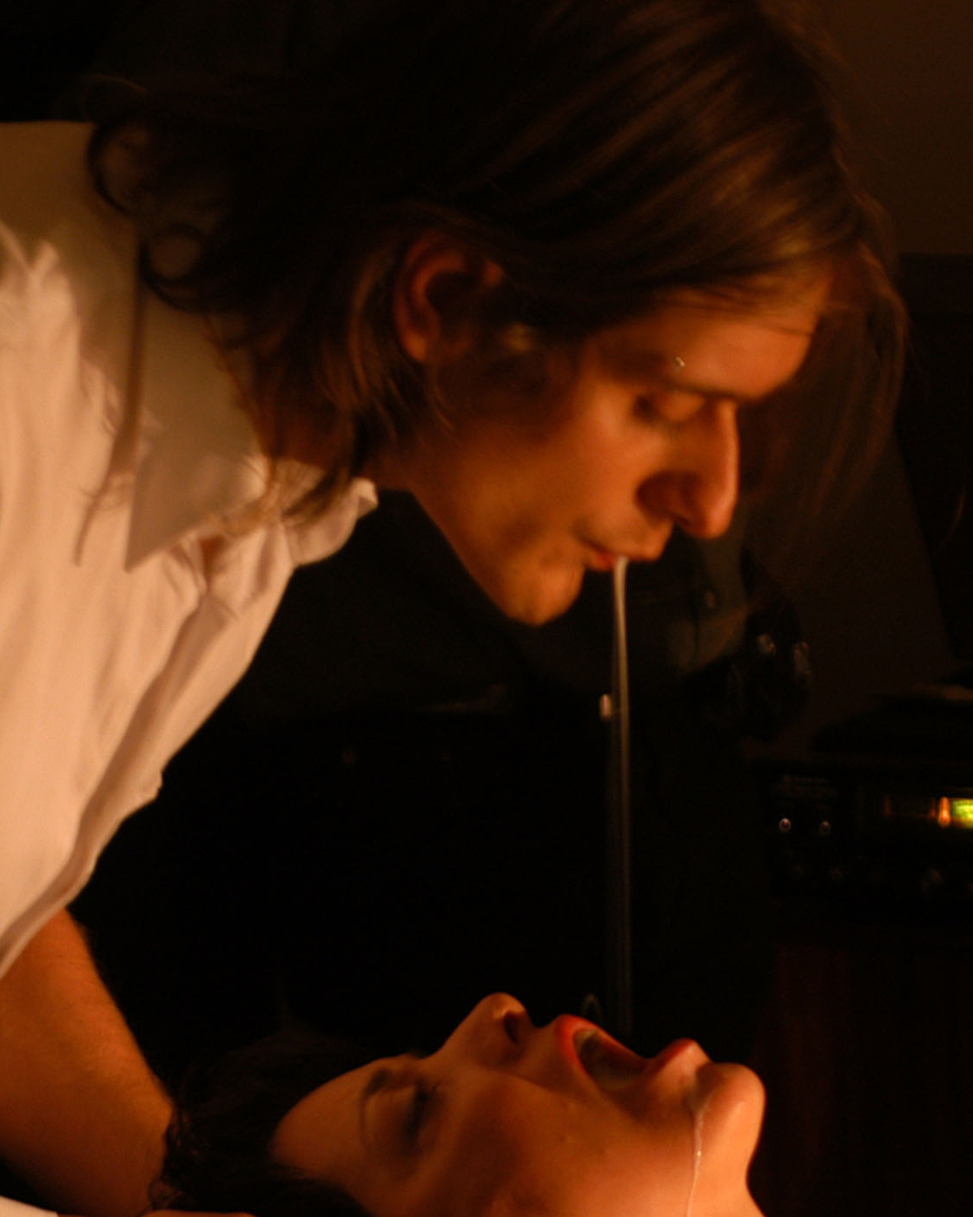
Richard Hancock
That feeling became the starting point for this piece. It’s not about one specific work, but more about how I felt in response.
As a dancer, choreographer and theatre maker, I’ve always cared about relationships – between people, between individuals and communities. But this time, I’m thinking about my relationship with the archive.
Just like the archived materials, that plastic sheet stands between us – keeping us apart. And only when it’s pulled away can you really see me, and I can truly see you.
In the second half of the performance, I use a new song by Sam Smith called To Be Free. It was just released yesterday at 5pm. Its timing felt perfect. It became a way for me to respond to the archives and to my own experience.
Thank you for being here today.
I hope this piece speaks to you in a real way.”
Juliet Cook
“I feel as though I have been performing every day of my life, and yet I have received no press, accolades or compensation for it all. I don’t even have good documentation – only my faulty memory.
I had all these home video tapes from my childhood which I approached similarly to the documentation that Home Live Art had of the performance work they supported. These tapes are so performative to me. The camera holds a certain amount of power, making the domestic theatrical.
One of the Salons we archived during this residency, Salon 42: A Day of Domestic Bliss, toys with these same ideas. In performances by Adrien Howells, Queenie and Jenny Jones, the audience was invited into a performance of domesticity – having their laundry washed and ironed, joining the performers for a coffee and a chat, while the audience watched on.
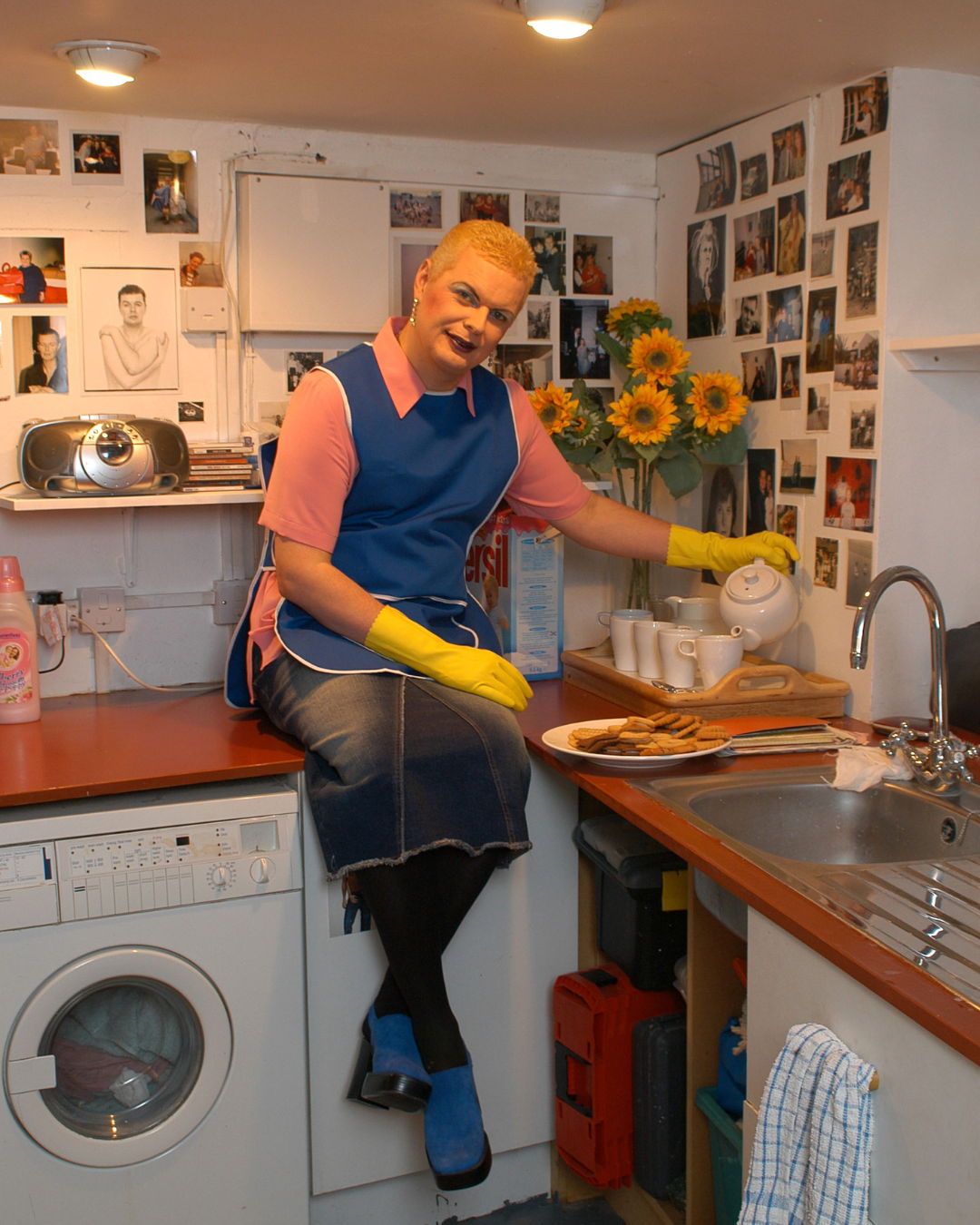
Adrian Howells
Looking back at the footage I have, it seems so odd how my family acts in front of the camera. I don’t know if it’s because they were filming or if they’ve just changed so much over 20 years. My family performs dinnertime. My mum, smiling through pain, asks to stop being filmed. And I, following their lead, reach the age where I too ask to perform for the camera.
Archiving this footage left me with more questions – about the implications of the camera, about what is rehearsed and what is not, and about how others might perform because they’re being watched.”
Huge thanks to Central Saint Martins for making this collaboration possible and for supporting the residency through funding.