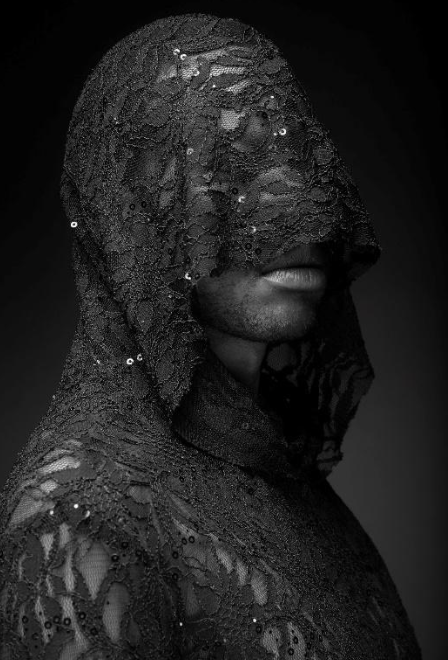
‘Hoodie’ (2025) ©Ajamu X
Queering History: Who Gets Remembered?
A Hastings Queer History Collective Event
When: Tuesday 12th May
Time: 7pm - 9pm
Where: Hastings Museum & Art Gallery, Bohemia Road, TN34 1ET
Ticket Price: £5/£3
A conversation on how queer histories can be uncovered and shared.
Hastings Queer History Collective members Kai Bossom and Sophie Fuller are joined by Ajamu X (darkroom/fine art photographic artist and archivist) and Syeda Ali (historian and educator).
Together they explore ways to uncover and share the histories of queer spaces and queer people, with a particular emphasis on marginalised queer communities.
Whose stories are we telling? What is the role of oral history for queer communities? How do we challenge invisibility and exclusion? How do we celebrate our queer presence through time?
Audience questions will follow, offering a shared opportunity to reflect on how queer histories are kept alive.
About the Panel
Ajamu X (HONS FRPS) is a darkroom / fine art photographic artist and archivist whose work has been exhibited in museums, galleries, and alternative spaces worldwide. His work is held in collections including Tate Britain, Arts Council of England, V&A, Martin Parr Foundation, and The Walker Gallery. In 2025, Tate published a monograph of his work as part of its Tate Photographic Series.
Kai Bossom is a Hastings-based queer historian and member of the Hastings Queer History Collective (since 2022). Kai is passionate about recovering queer stories hidden within local Hastings history. Their essay ‘Gay Bogies’ features in A Queer Scrapbook: Britain and Ireland since 1945 (2026).
Sophie Fuller is a writer and scholar who plays with words to create worlds, ask questions and provoke thought. As a musicologist, she explores the ways people have used music to make sense of their worlds, remembering the lives, careers and music-making of those we are in danger of forgetting.
Syeda Ali has taught history in London and Beijing, promoting diversity within the history curriculum, and championing equality and diversity more broadly in schools. Following an MA in Queer History at Goldsmiths, she completed a PhD at Cambridge University using oral history to research the impact of Section 28 on schools in different areas of the UK.
Part of the Lemons, Laws and Secret Doors exhibition event programme from the Hastings Queer History Collective. Find out more.
-
Access
The building has flat access and an accessible toilet.
A gender neutral toilet is available.
The Museum website has the full building access information.
Explore Related